The AAPI Vote Hawaii and the Filipino Vote Potential
Comprehensive analysis of the Asian American and Pacific Islander electorate in Hawaii, revealing population trends, linguistic diversity, and socioeconomic challenges.
AAPI Eligible Voters in Hawaii
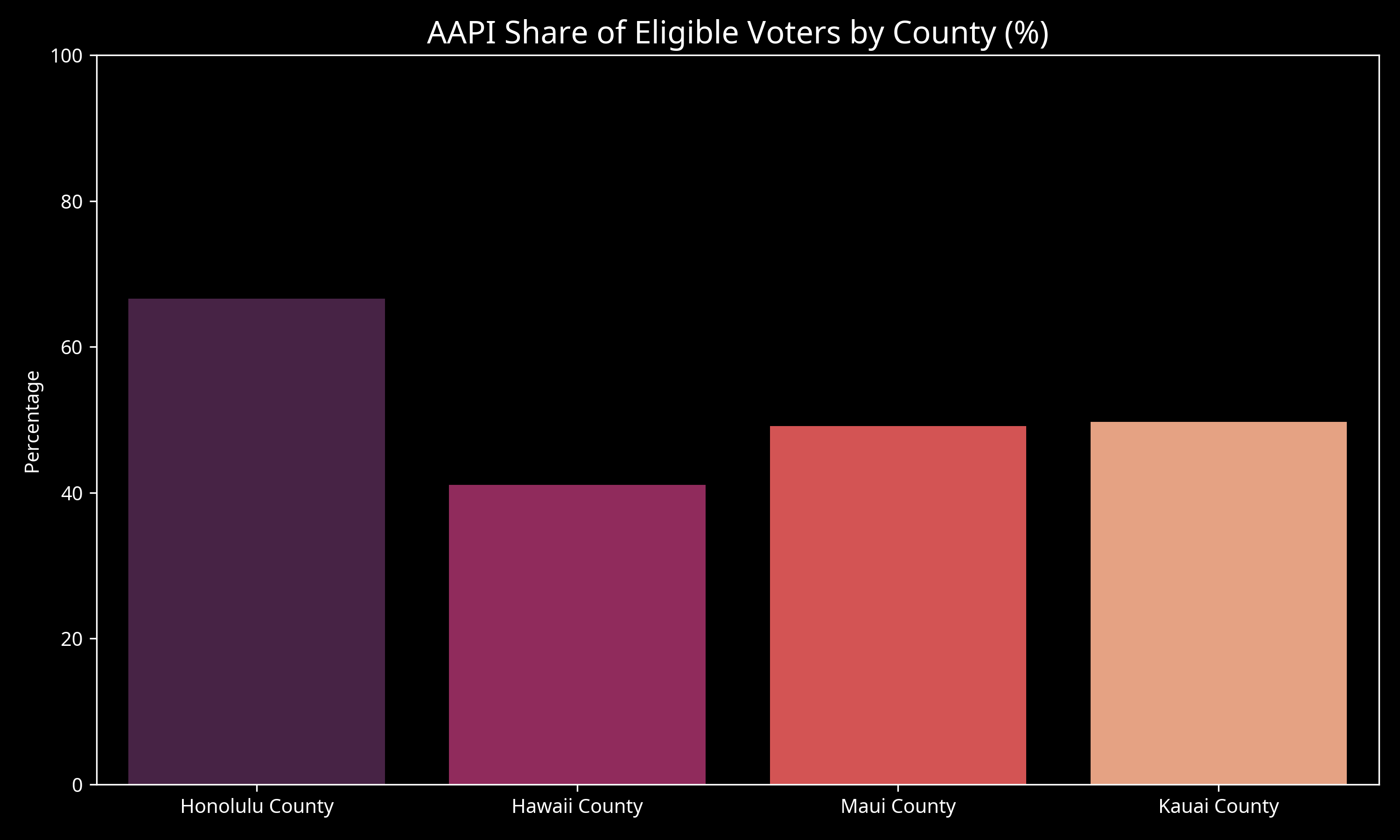
AAPI Share of Total Electorate
Naturalized Citizens
Speak Non-English at Home
Voter Engagement Tracker
Tracking AAPI voter turnout trends and participation rates across Hawaii's diverse ethnic communities.
- Asian American
- Native Hawaiian & PI
- General Population
Historical Insight: The 3-cycle trend reveals a resilient upward trajectory for NHPI voters, who have closed the gap with the general population significantly since 2016.
While 2020 saw a universal spike due to mail-in voting, 2024 retention rates were higher for Asian Americans (+9% vs 2016) than the general electorate (+4% vs 2016).
Filipino voters saw the largest increase (+9%) in turnout compared to 2020.
Chinese American turnout saw the most significant decline (-7%) from 2020 levels.
Strategic Analysis: The Filipino Vote
The Filipino Vote: Key to a 2026 Republican Victory?
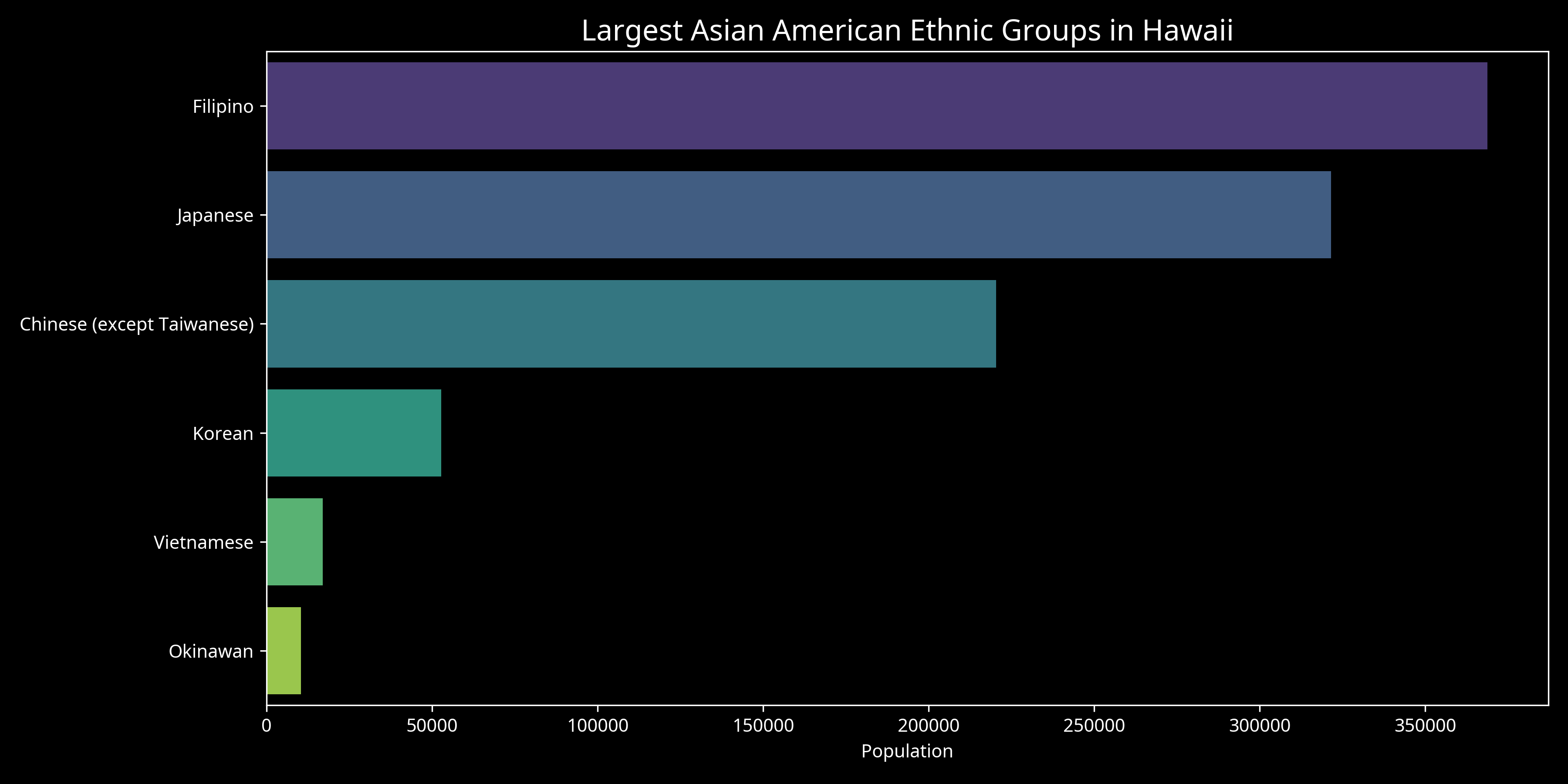
While Filipinos are the largest Asian ethnic group in Hawaii (~25% of population), their voting power is currently underutilized. However, with ~110,500 registered voters representing 12.8% of the electorate, this bloc is large enough to swing a close gubernatorial race.
- Filipino American
- Other Voters
| Precinct | Area | District Location | Filipino % | Unregistered Gap | Priority |
|---|---|---|---|---|---|
| 38-01 | Waipahu (West) | Dist. 38 (Mililani) | 58.2% | +850 | High |
| 39-02 | Waipahu (East) | Dist. 39 (Royal Kunia) | 54.7% | +720 | High |
| 41-03 | Ewa Beach (North) | Dist. 41 ('Ewa Beach) | 49.5% | +680 | High |
| 30-01 | Kalihi (Central) | Dist. 30 (Kalihi) | 47.8% | +920 | High |
| 40-02 | Ewa/Kapolei | Dist. 40 (Lower Village) | 42.1% | +550 | Medium |
| 37-01 | Mililani/Waipio | Dist. 37 (Waipi'o) | 38.4% | +480 | Medium |
| 28-03 | Kalihi Valley | Dist. 28 (Sand Island) | 36.9% | +610 | Medium |
| 44-01 | Nānākuli | Dist. 44 (Honokai Hale) | 28.5% | +350 | Low |
Canvassing Strategy
Focus registration drives on Waipahu (38-01, 39-02) and Kalihi (30-01) where unregistered potential is highest. These precincts alone represent ~2,500 potential new voters.
There is a gap of roughly 37,000 eligible but unregistered Filipino citizens. Closing this gap through targeted registration drives in Waipahu and Kalihi could be decisive.
Total registered voters increased by +13.8% in 2022 vs 2018. The Filipino community's growth outpaces the general population, increasing their leverage each cycle.
High-density Filipino neighborhoods like Ewa Beach, Waipahu, and Kalihioverlap with several "MUST WIN" priority swing districts, making them the epicenter of the 2026 strategy.
Candidate Matching Tool
Find out which political profile aligns best with your views on Hawaii's key issues.
SMS Outreach Campaign
Draft and preview targeted SMS messages for specific voter segments to drive engagement.
* Standard SMS segment is 160 characters. Keep messages concise for higher engagement.
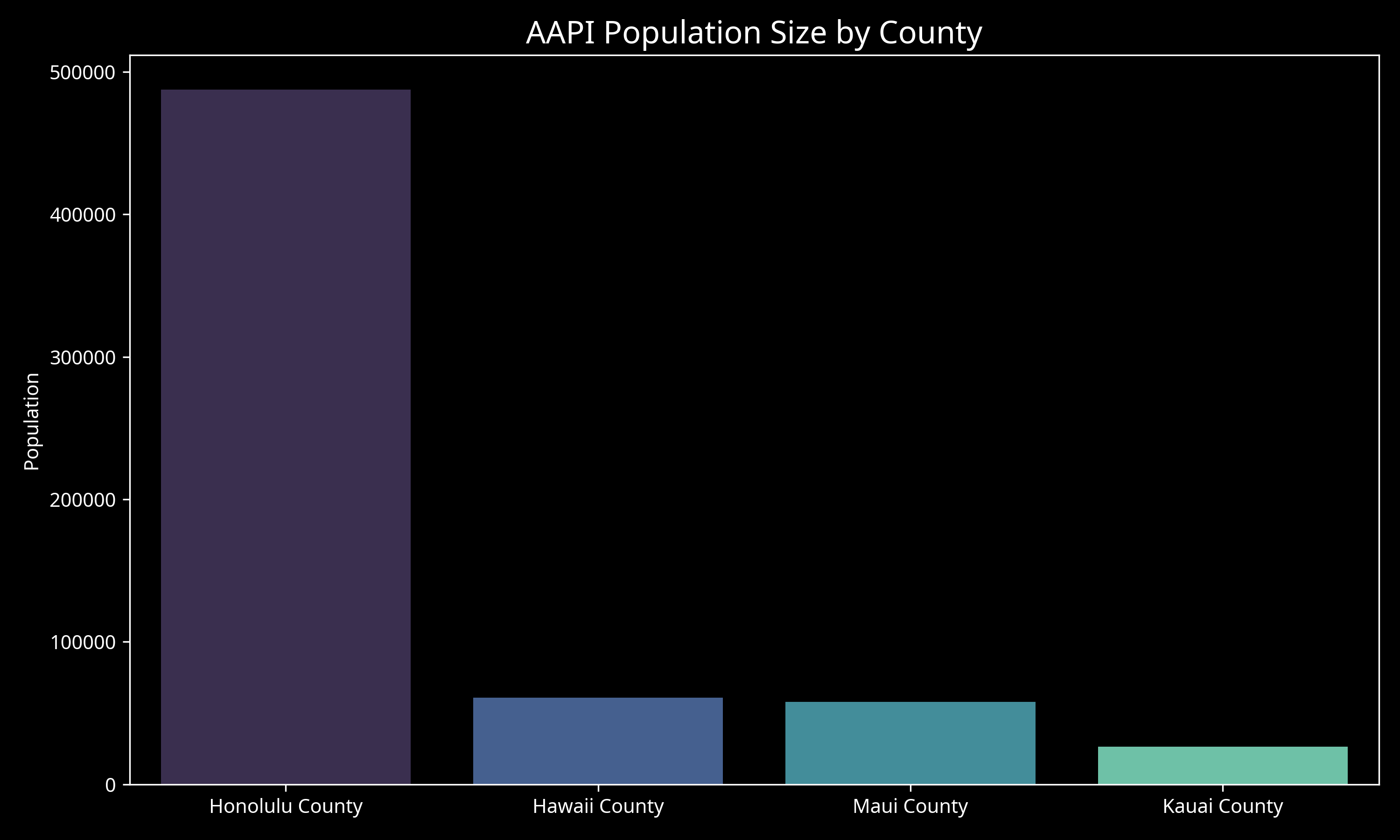
Population & Distribution
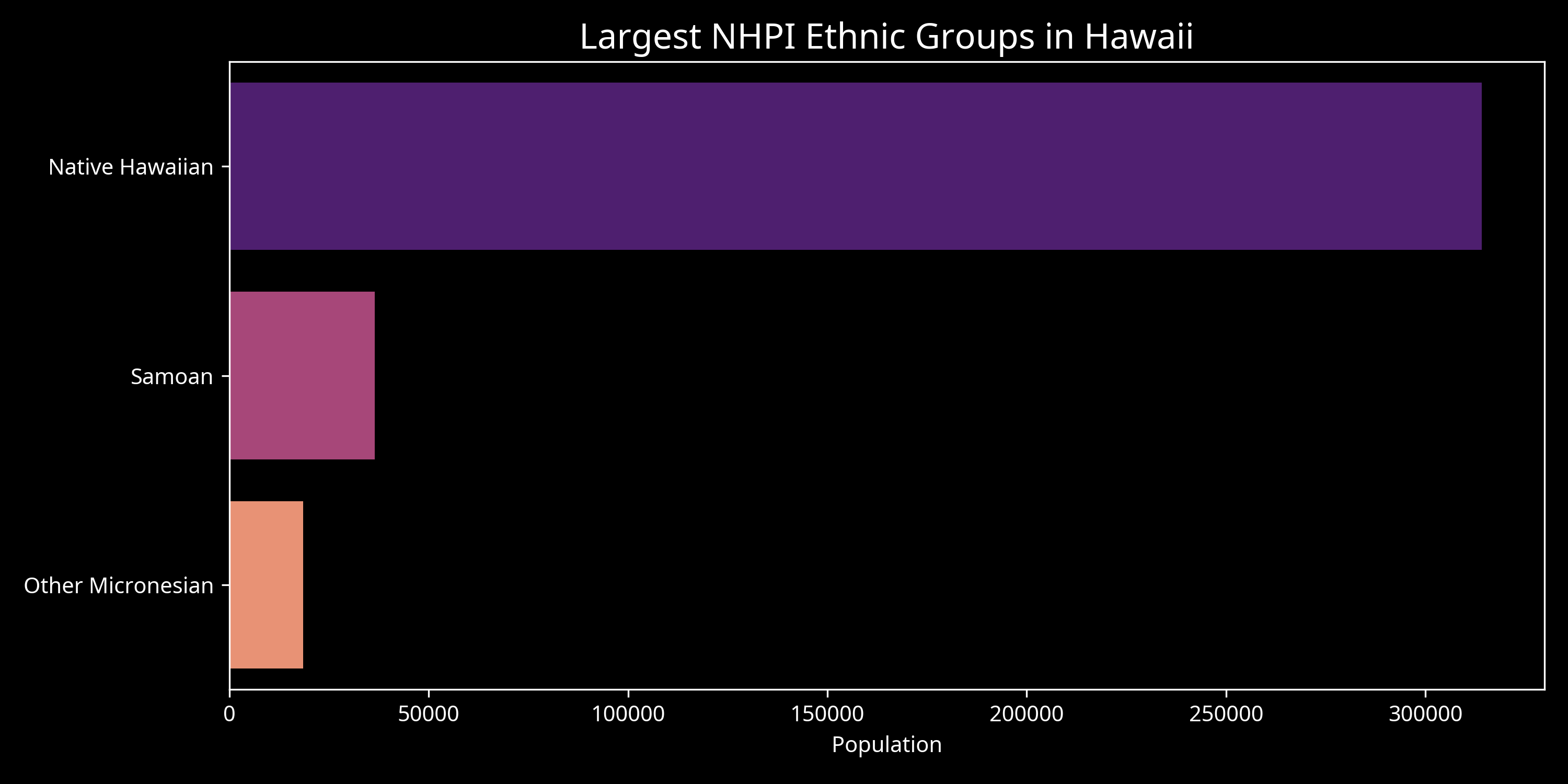
Ethnic Diversity
Language & Demographics
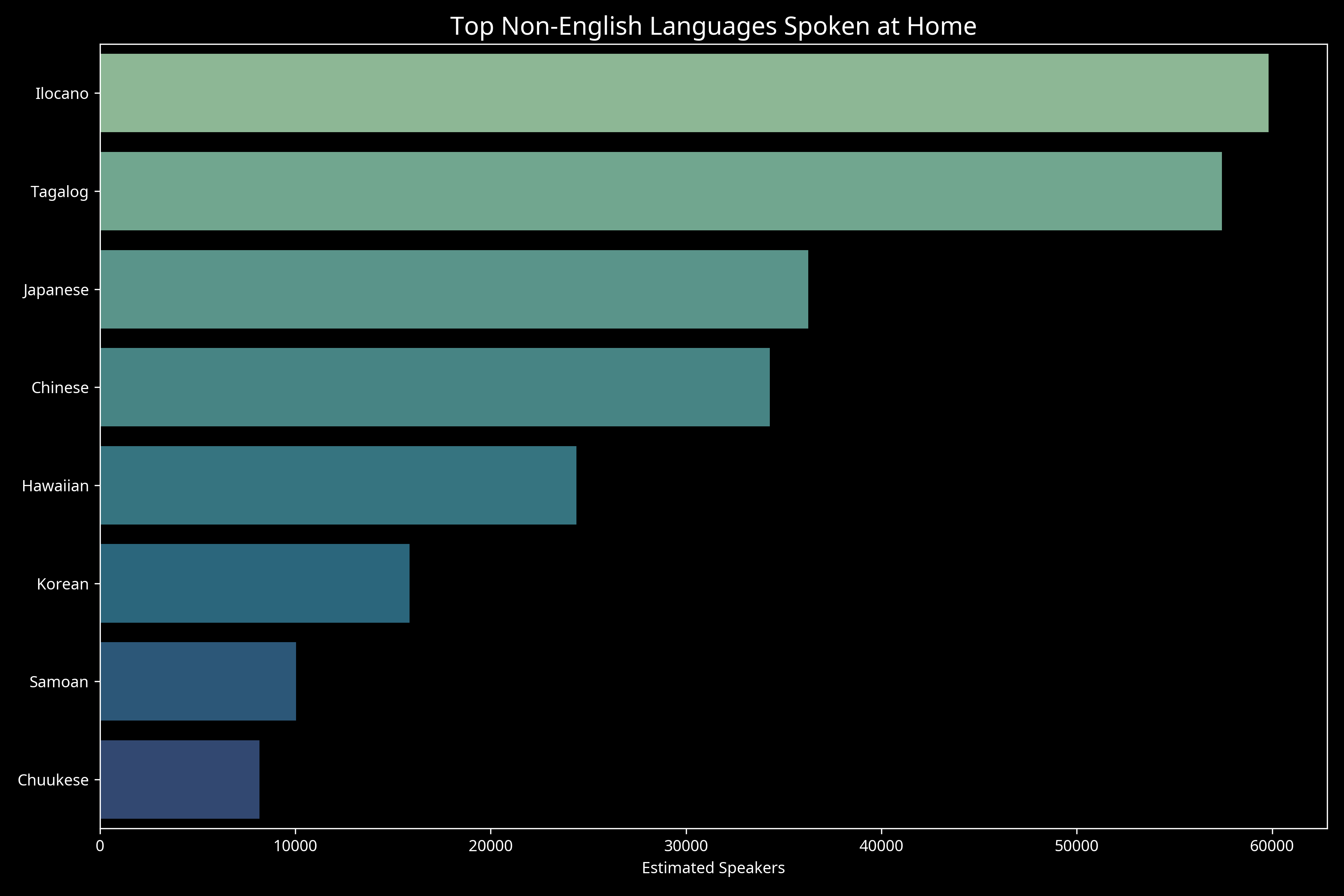
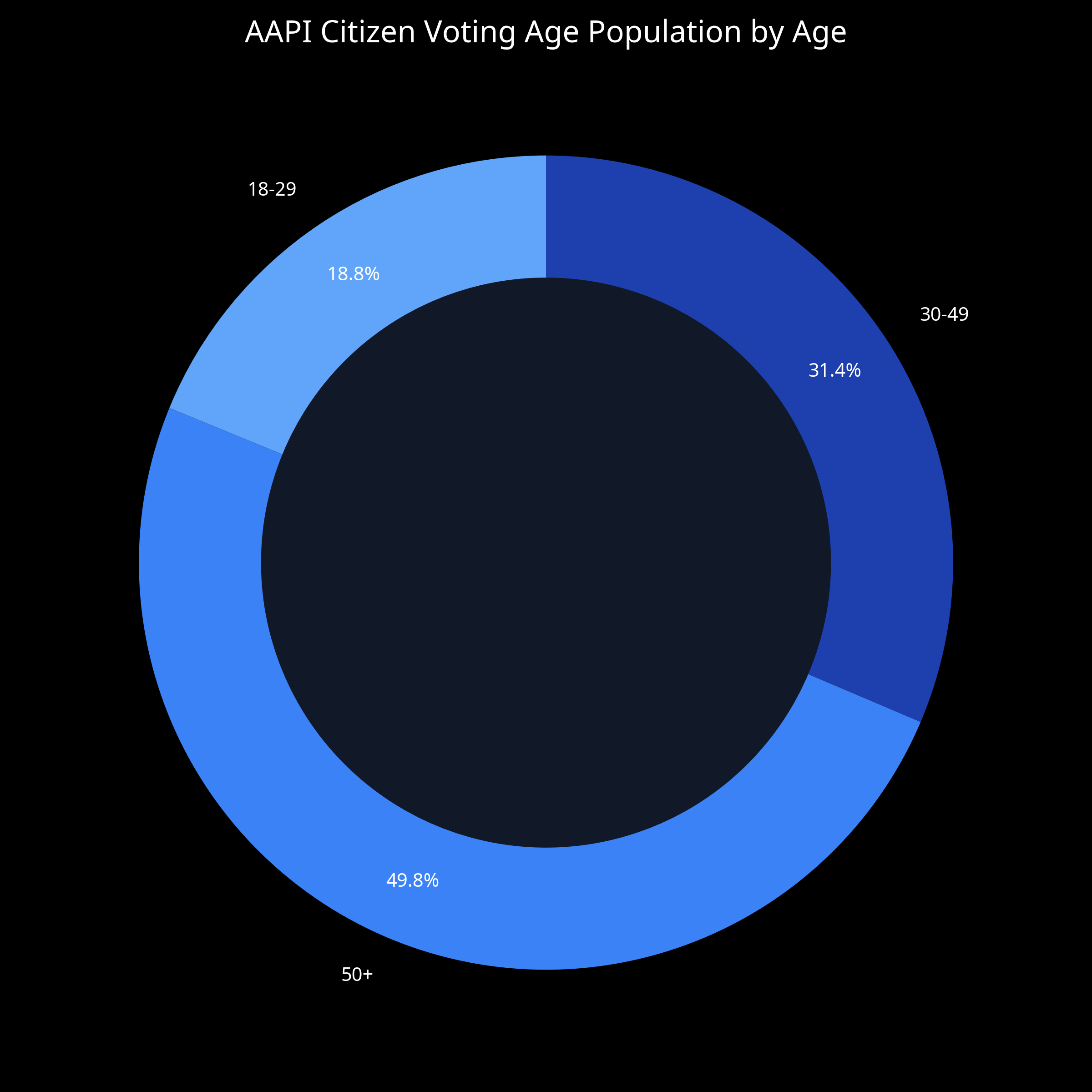
Socioeconomic Challenges
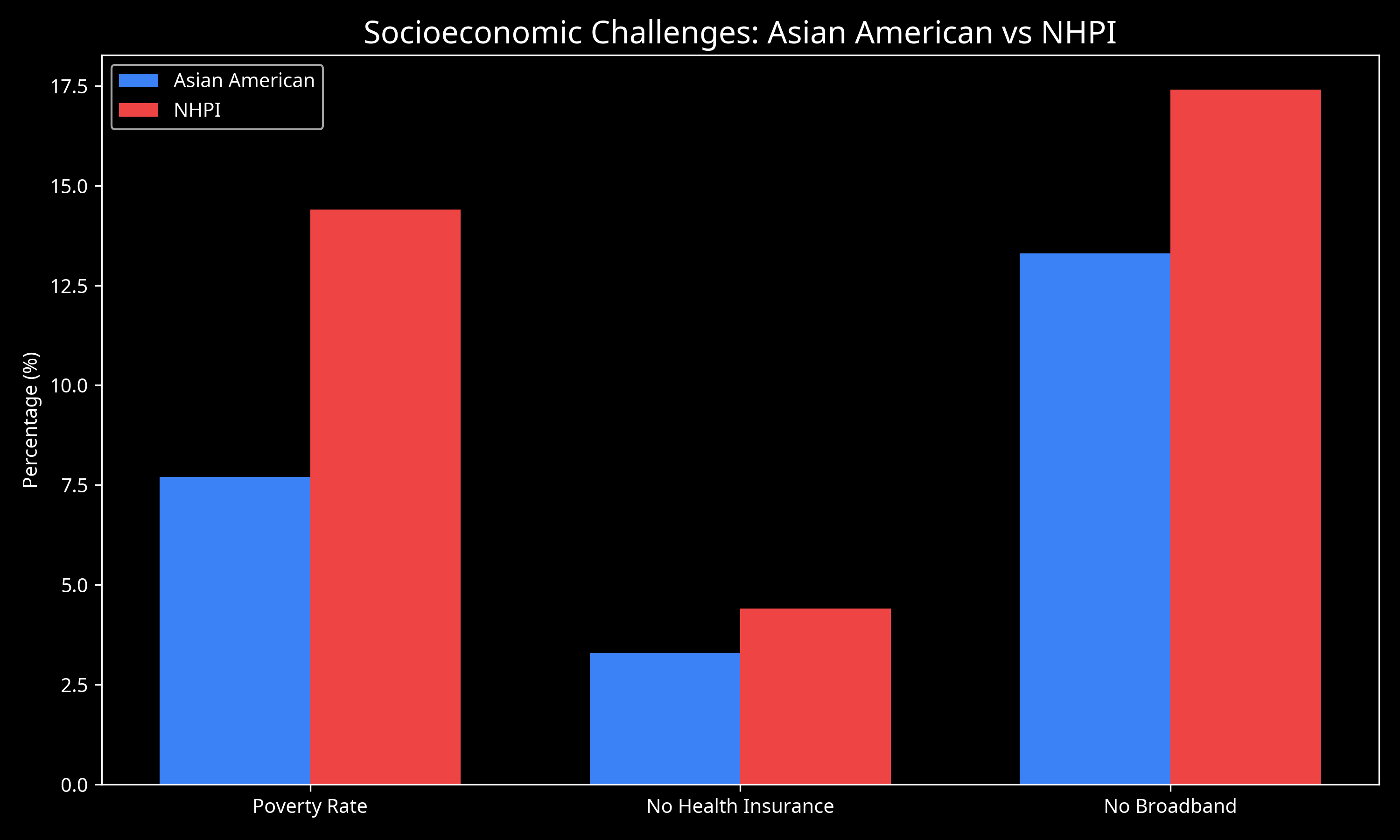
Poverty Gap
NHPIs are nearly twice as likely to live in poverty (14.4%) compared to Asian Americans (7.7%).
Digital Divide
17.4% of NHPI households lack broadband access, hindering digital civic engagement.
Language Barriers
16% of Asian American adults in Hawaii are Limited English Proficient (LEP).
Community Resources Directory
Connect with local organizations dedicated to empowering AAPI communities through civic engagement and advocacy.
A member-based non-profit organization with a mission to enhance the cultural, economic, political, and community development of Native Hawaiians.
An umbrella organization representing numerous Filipino community groups across the state, promoting unity and civic participation.
The local chapter of the Japanese American Citizens League, dedicated to protecting civil and human rights and preserving Japanese American heritage.
Empowering the Micronesian community in Hawaii through youth programs, health services, and cultural preservation.
Promoting the growth and welfare of the Filipino business community and fostering civic leadership.
A non-profit organization dedicated to fostering cultural awareness and leadership skills among Filipino youth in Hawaii.
Promoting Chinese culture and encouraging active participation in the civic life of Hawaii.
Supporting the Micronesian community on Hawaii Island through advocacy and resource sharing.
Empower the AAPI Vote
Understanding these demographic trends is crucial for effective community organizing and policy advocacy. Use this data to target outreach, improve language access, and build political power.